

Women Shaping the Skyline
Last week we had the pleasure of jointly hosting an event at the NLA’s London Centre with Rund Partnership titled ‘Women Shaping the Skyline’.
The event brought together women from across the development sector to celebrate those who have shaped London throughout history. Gathered around the London model, we heard from five brilliant speakers from Mapp Architecture, Comm Comm and Rund, who shared their experiences and perspectives, pointing out their notable schemes on the model.
To kick off the evening, Tanya Jordan, a Director within Union4’s London Planning Team, provided a short history of some key developments in London over the last 150 years which have been shaped by women.
Octavia Hill
In the late 1800s in Southwark, Octavia Hill, a pioneering social reformer and co-founder of the National Trust, focused on badly managed and overcrowded housing, a radical approach for the Victorian era. At Red Cross Gardens in Southwark, she transformed a derelict paper factory and unhygienic tenement into cottages for the local working-class community. She believed in the quality of the housing but also in the surrounding environment – creating gardens and a community hall – something today we would of course see as an integral part of the public realm and social infrastructure.
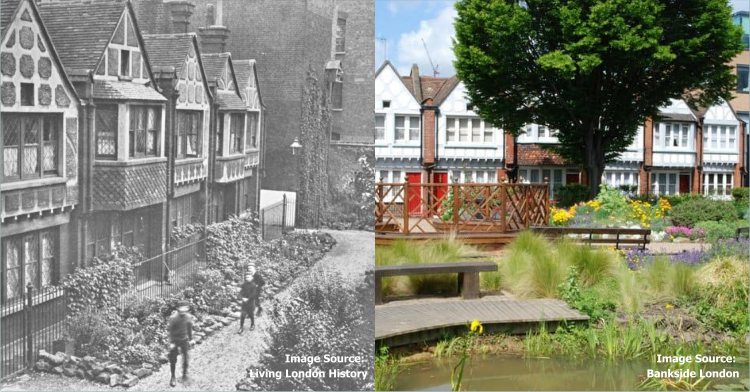
Octavia Hill also believed that property management required patience and empathy, uniquely suited to women; her management team known as Lady Housing Managers initially started as volunteers and transitioned into a highly trained and professional workforce. In 1916, women who trained under her system went on to found the Association of Women Housing Workers. Through mergers, this pioneering female-led group laid the foundations for today's Chartered Institute of Housing.
Emma Cons
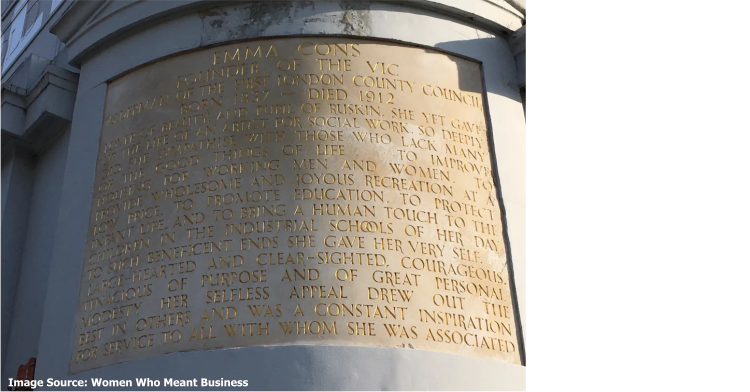
One of the first Lady Housing Managers was Emma Cons, who supervised some of the more squalid slums in Marylebone and Drury Lane. In 1880 she took on the lease at the Royal Victoria Theatre – transforming it to provide cheap tickets and entertainment for working class Londoners. It became known as the Old Vic which continues to be a prominent cultural institution today.
'The Ladies Bridge'
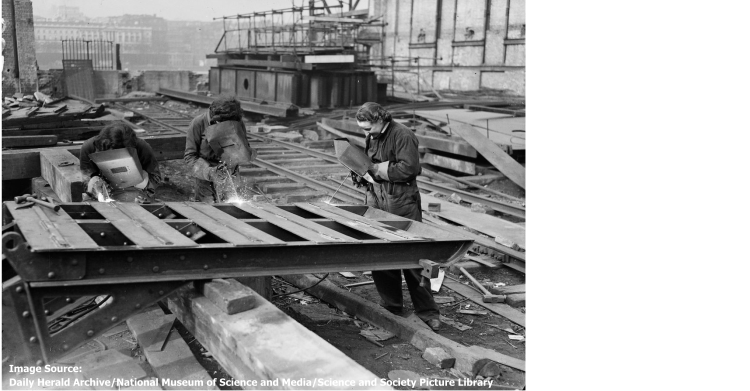
Moving into the 20th century, Waterloo Bridge was re-built during the height of the second world war by a majority female workforce and was then nicknamed ‘The Ladies Bridge’.
Judith Ledeboer
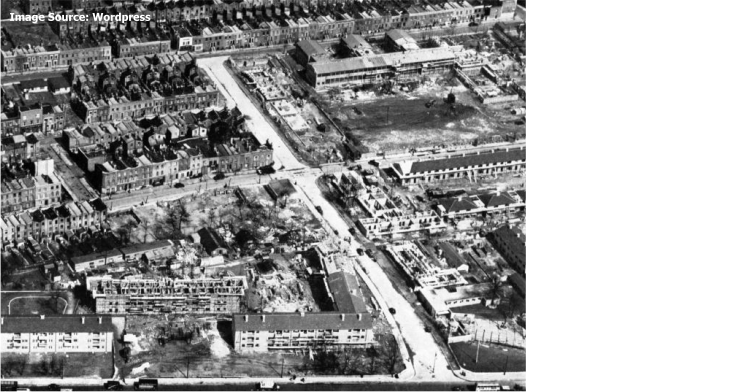
Turning to the post war era, the housing crisis demanded radical urban reinvention, giving rise to several pioneering female architects including Judith Ledeboer. Ledeboer was the first woman in the Housing Ministry to have direct responsibility for public housing and oversaw a committee which provided guidance to local authorities on housing design, including recommended minimum room sizes and internal floor areas – eventually transitioning into the Parker Morris Standards and then the Nationally Described Space Standards that we use today.
Ledeboer moved into architecture during the 1951 Festival of Britain where she was part of a team to deliver ‘live architecture’ rather than a model. This led to the delivery of the Lansbury Estate in Poplar where she designed the first purpose-built residential homes for the elderly, commissioned by the London County Council. Rather than isolating the elderly in institutions, she integrated them into the centre of the community, close to Chrisp Street Market and local schools. Her progressive layout became a gold standard, emphasising the need to protect the dignity and independence of vulnerable citizens. The Lansbury Estate continues to evolve today through a new estate regeneration programme.
Matrix Feminist Design Co-operative
Jumping into the 1980s, a radical, women-led architectural practice emerged called the Matrix Feminist Design Co-operative. Their central premise was that the built environment is not neutral, and that the design of houses, public transport and city centres can actively restrict women’s lives. Their most critically acclaimed building is the Jagonari Asian Women’s Centre in Whitechapel. This was designed hand-in-hand with local Bangladeshi women, it incorporated a mosque inspired courtyard and safe layout offering childcare facilities and educational rooms. Today, the Centre is still used by Tower Hamlets for community groups.

Turning to some of the newer additions to London.
Dame Zaha Hadid
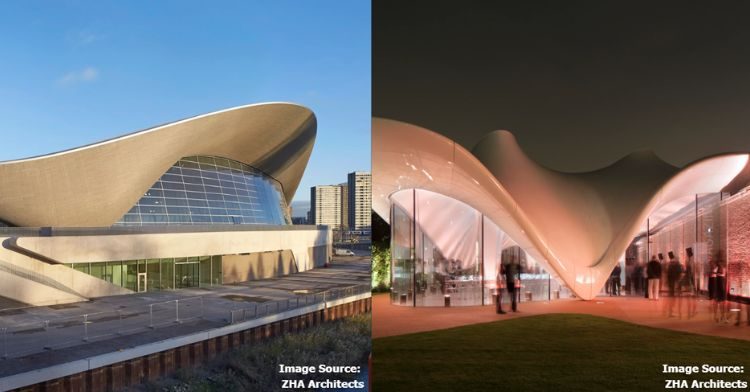
The London Aquatics Centre at the Olympic Park and the Serpentine Gallery in Hyde Park, were designed by the world-renowned Dame Zaha Hadid. Hadid was the first woman to win the Pritzker Prize and the RIBA Royal Gold Medal in her own right.
Amanda Levete
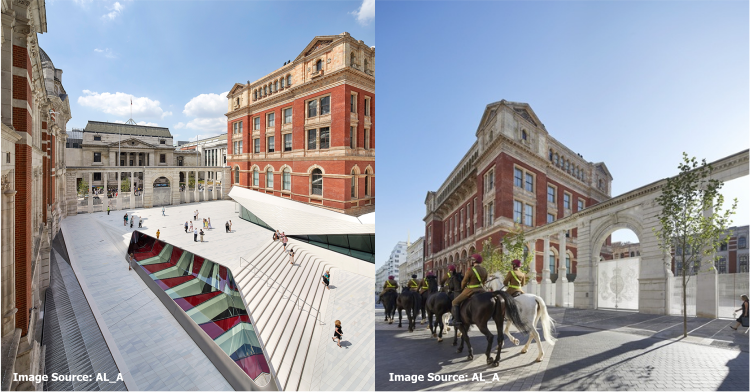
The new courtyard and underground gallery at the Victoria & Albert Museum designed by Amanda Levete at AL_A.
Patty Hopkins
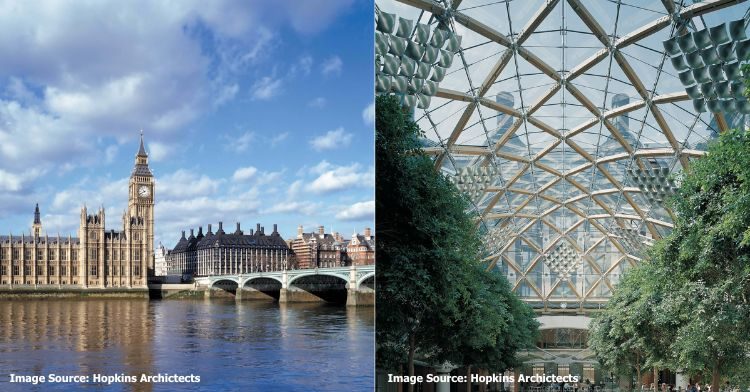
Portcullis House in Westminster co designed by Patty Hopkins.
Julia Barfield
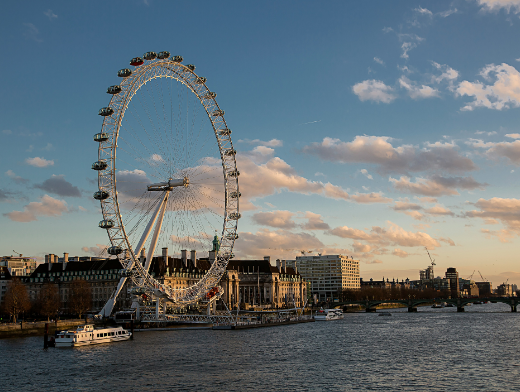
And the London Eye, co conceived by architect Julia Barfield as a temporary millennium landmark which now of course has become one of London’s most defining symbols.
This event was a fantastic opportunity to celebrate the contribution women make to our industry and the different perspectives they bring to the way we design, deliver and shape places for people and communities.
Other news
See all
Assessing grey belt in accordance with the new NPPF
It is now approaching two years since the grey belt concept was formally introduced into planning policy via the December 2024 version of the…...
Read now
Union4 Appointed to ESPO Framework
We are delighted to announce that Union4 has been awarded a place on the ESPO Estates Management Professional Services Framework 2700_26 under Lot 8-…...
Read now